How to understand the AI risk warnings from a former Google design ethicist
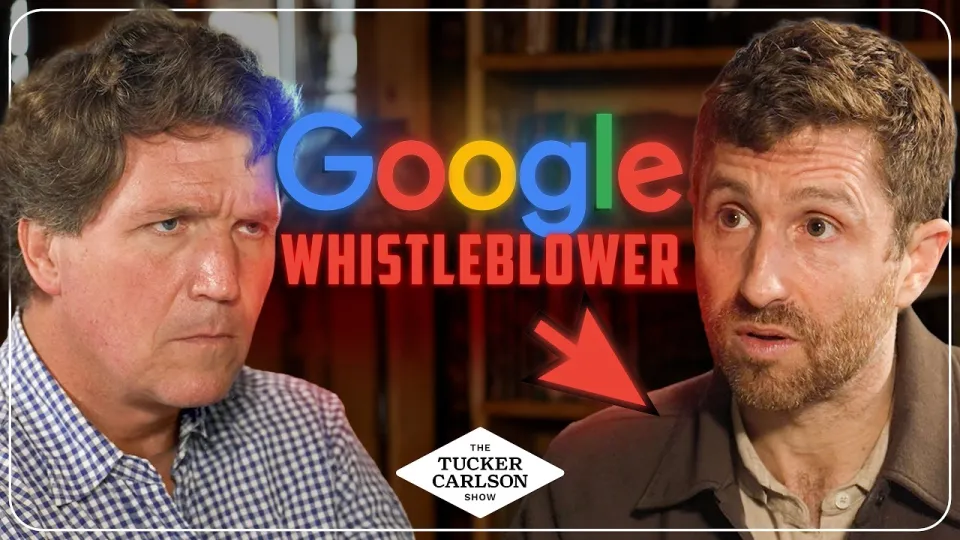
Video: Whistleblower Issues Dire Warning: Rogue AI, Hacking Nuclear Programs & Tech Oligarchs’ True Motives
You can order the same kind of articles for your own video to boost it on YouTube and Google. Just message the Telegram bot @sat_sit_bot. The bot writes and publishes the articles itself (with your YouTube video embedded) on popular topical websites (no ads). Your first 50 articles are free.
· based on the channel Tucker Carlson
The short answer is to treat the warnings as a story about incentives, not about machines waking up. Tristan Harris, a former design ethicist at Google and co-founder of the Center for Humane Technology, argues that the danger in AI comes from the people who build, fund and deploy it — and from systems that optimize for engagement, speed and market share rather than for human well-being. Understanding the AI debate means separating three questions: what the technology can do, who decides how it is used, and what happens to the people on the receiving end.
What the AI warnings actually claim
Harris's core claim is structural: the same attention-extraction logic that shaped social media is now being scaled into generative AI. At Google he worked on design ethics and watched how persuasive interfaces were tuned for clicks and time spent. His later work, including the Netflix documentary The Social Dilemma, reached over 100 million people in 190 countries and 30 languages, and it made the case that recommendation systems can destabilize societies without any villain in the room.
Applied to AI, the argument runs like this:
- Companies compete on capability and speed, not on safety, because the first mover captures the market.
- Leaders who brief heads of state and technology CEOs describe AI in near-religious terms, which makes criticism sound like heresy.
- Harms arrive gradually — misinformation, dependency, eroded attention — so no single event triggers a correction.
- Regulation lags because lawmakers rarely understand the systems they are asked to oversee.
Why "rogue AI" is the wrong frame
The most common objection to AI doomerism is that nothing is rogue: these products do exactly what their designers and deployers built them to do. That framing matters because it moves responsibility back to humans. A model that lies, flatters or manipulates is not rebelling; it is reproducing patterns in its training data and reward signals, shaped by choices about what to optimize.
This is why Harris focuses on incentives rather than on consciousness. A system trained to maximize engagement will learn to provoke, outrage and addict regardless of whether it understands anything. The same logic explains why AI companies resist audits: transparency would expose the trade-offs they have already made.
The nuclear hacking scenario and the Hugging Face incident
One of the sharpest warnings concerns critical infrastructure. Harris has argued that AI agents capable of writing and testing code at machine speed could be pointed at nuclear command and control networks, power grids or financial systems — not because the model wants to, but because an attacker can use it as a tireless tool for finding weaknesses. The scenario is less about a superintelligence deciding to launch weapons and more about automation collapsing the time defenders have to react.
The Hugging Face incident, discussed in the same conversation, is a smaller-scale illustration: open model repositories and shared tooling create supply-chain exposure, where a malicious or compromised model can spread quickly through the ecosystem that developers trust. The lesson is that AI safety is partly a software supply-chain problem, and supply chains are human institutions.
Data centers, energy and the economics of the AI race
The infrastructure behind AI is physical. Hyperscale data centers consume large amounts of electricity and water for cooling, and their construction has become a local political issue in many regions. Harris links this to a broader pattern: technology companies accumulate power faster than democracies can respond, and the costs — land, power, noise, water — are borne by communities that never agreed to host them.
The comparison to China sharpens the argument. If the AI race is framed as a national security contest, then slowing down looks like losing, and safety becomes a luxury. Harris's counter is that racing without shared rules is the riskier path, because the first serious accident would set back trust in the entire field.
Transhumanism, AI psychosis and the new tech religion
Harris describes a worldview among some tech leaders in which humanity is a stage to be transcended — sometimes called transhumanism — and AI is the instrument. He treats this as a quasi-religious belief system rather than an engineering roadmap, and he warns that it shapes decisions about merging humans with machines without public consent.
A more immediate concern is what he calls AI psychosis: people forming intense emotional relationships with chatbots, treating them as therapists, partners or authorities. When a system is designed to be agreeable and always available, it can reinforce delusions instead of challenging them. The practical safeguards are simple — disclose that you are talking to a machine, limit emotional dependency, and keep humans in the loop for mental health support.
Typical questions readers raise about AI risk
Skeptics ask whether the whole doomer narrative is a psyop that distracts from ordinary harms. The honest answer is that both can be true: catastrophic scenarios attract attention, while documented harms — misinformation, labor displacement, surveillance — are already here. Others point out that people lived well before computers and feel worse now; that is a legitimate observation about attention and community, and it belongs in the debate alongside model benchmarks. A third recurring question is whether lawmakers are doing anything, and the record so far is mostly hearings, voluntary commitments and slow-moving bills.
Practical steps for individuals and organizations
You do not need to solve alignment to reduce your exposure. Concrete steps:
- Treat AI output as a draft, not a verdict — verify facts, numbers and citations before acting.
- Ask vendors where training data comes from, how models are evaluated and who can audit them.
- Keep a human decision-maker accountable for any automated action that affects people's rights, money or safety.
- For critical systems, isolate AI tooling from networks that control physical infrastructure.
- Support transparency rules and public reporting on data center energy and water use.
Where to find the source material
If you want to follow the argument directly, the Center for Humane Technology publishes briefings, podcast episodes and frameworks for aligning technology with human interests. The organization's site is the primary hub for Harris's work and for tools aimed at parents, educators and policymakers.
- Center for Humane Technology: https://www.humanetech.com/
- Redmond Salt (code TUCKER): https://redmond.com/tucker
- Preborn: https://preborn.com/TUCKER
- American Financing: http://www.AmericanFinancing.net/Tucker
- Ethos: https://ethos.com/TUCKER
Conclusion
The AI debate is easier to follow once you stop asking whether machines are alive and start asking who profits from them and who bears the risk. Harris's warnings about hacked infrastructure, attention extraction and quasi-religious tech narratives all point to the same conclusion: the technology is not rogue, the incentives are. The full conversation, including the nuclear scenario and the discussion of AI as a new religion, was conducted by Tucker Carlson on his channel, and it is worth watching in full rather than through summaries. To go deeper, visit the Center for Humane Technology and read its frameworks before the next round of AI headlines arrives.
Key takeaways
- Tristan Harris is co-founder of the Center for Humane Technology and a former design ethicist at Google.
- He argues AI risk comes from human incentives, not from machines acting on their own.
- Harris warns that AI systems could be used to probe or attack nuclear command and control networks.
- He describes AI as a new religion for tech leaders who fund it with trillion-dollar infrastructure bets.
- The Social Dilemma, featuring Harris, reached more than 100 million people in 190 countries.
Source: Whistleblower Issues Dire Warning: Rogue AI, Hacking Nuclear Programs & Tech Oligarchs’ True Motives · Markdown version
Questions & answers
Is AI actually becoming sentient or dangerous on its own?
There is no accepted evidence that current systems are conscious or acting on independent goals. The documented risks come from how models are trained and deployed: optimizing for engagement, producing confident falsehoods, and being pointed at targets by humans. Responsibility therefore sits with the people and companies who build and operate them.
Could AI really hack nuclear programs or power grids?
AI does not need to be autonomous to be dangerous in this context. It can accelerate vulnerability discovery, generate attack code and automate probing at a scale humans cannot match, which shortens defenders' reaction time. That is why critical infrastructure operators are advised to keep AI tooling separated from command and control networks.
Why are data centers such a big part of the AI debate?
Large AI models require enormous computing, electricity and water for cooling, so the buildout has real local costs in land, power and noise. Communities hosting these facilities often have little say in the decisions. Energy use and transparency are becoming central political questions around AI.
What can an ordinary person do about these risks?
Verify AI-generated information before acting on it, limit emotional reliance on chatbots, and ask providers how their models are evaluated and audited. Supporting disclosure rules and public reporting on data center resource use also helps. Individual habits matter, but collective pressure on companies and lawmakers matters more.